
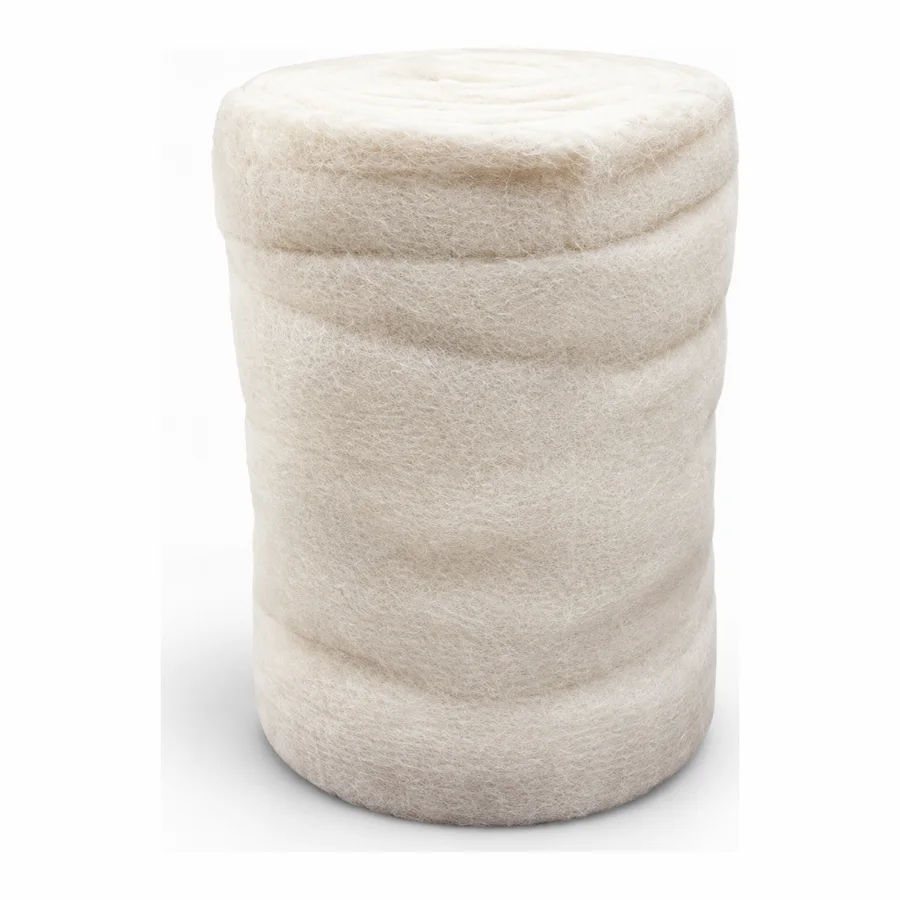
VANTERIS Purified Cotton Wiping Roll 3-Ply 10 × 16 in
100% purified cotton roll, 3-ply, 10 × 16 in, 100 sheets. Equivalent to RYMPLECLOTH® 301 and HERMITEX® 300.
VTN-WP-CT-PUR-3P-1016100% purified cotton3-plyPre-cut roll100
Surface preparation, FOD control and AMS3819 wiping materials in aerospace manufacturing.
In aerospace, cleaning is not cosmetic: it is a process requirement. A poorly prepared surface before an adhesive or a coating does not look different, but it fails differently. And whatever stays inside a closed structure does not come out.
Before painting, sealing or bonding, the surface is degreased and solvent-cleaned. The classic method — wet a cloth, wipe, then dry with a clean cloth before the solvent evaporates — depends entirely on the cloth material.
If the cloth contributes silicone or finishing agents, the coating de-wets and you get the defect known on the shop floor as fish-eye. That is why specifications call for silicone-free cloths with controlled extractables, not merely "clean cloths".
AMS3819 is the SAE specification aerospace wiping cloths are bought against. It classifies the material by class, grade and form, and sets the tests: weight, absorbency, lint release, extractables in water, hexane and methyl ethyl ketone, silicone content and aqueous extract pH.
When a cloth states AMS3819 Class 1, Grade A, Form 1, it is saying something verifiable with a test report behind it. That is the difference between buying against a specification and buying against an adjective.
Foreign object debris control is a discipline of its own, with NAS 412 as the prevention reference. A fibre, a piece of cloth or a swab that lost its head inside a structural or engine cavity are findings with serious consequences.
Hence the preference for sealed-edge wipers, which shed no yarn when cut, and for swabs whose head is attached to the handle in a way the process solvent will not release.
In practical order: compatibility with the process solvent, absence of silicones and finishing agents, low fibre release, and enough absorbency that the cloth does not saturate on the first pass.
And lot traceability. It is the item most often dropped when comparing prices, and the only one that lets you close an investigation when a batch of parts comes out with an adhesion defect.
The classic material for aerospace surface preparation is purified woven cotton, usually in a multi-ply construction and supplied as a roll of pre-cut sheets. The purification matters: raw cotton carries waxes, natural oils and processing agents, which is precisely what must not be left on the surface.
The purification process strips those residues and leaves an undyed, non-fluorescent material — the absence of fluorescence allows black-light inspection — with high absorbency and very low extractables. In a pre-cut roll the added benefit is consumption: you take the sheet you need, not a handful.
Many aerospace special processes are audited under process-accreditation schemes, and audits look at the consumable the same way they look at the equipment: what was used, against which specification, with what evidence. The work instruction should name the cloth by its specification and part number rather than describe it.
The same applies to storage. A qualified cloth kept on an open shelf next to lubricants is no longer a qualified cloth, and that is a frequent audit observation which costs nothing to avoid.
Purified cotton dominates surface preparation on absorbency and on its specification history. Knitted polyester serves better where the criterion is minimum release on a finished surface. Cellulose-polyester nonwoven is the economical option for general cleaning and spills, away from the critical area.
No single material wins at everything: the winner is the one chosen for the specific operation. Defining three or four references for the whole plant, with the use of each one written down, avoids both the overspend of using the best everywhere and the defect of using the cheap one where it does not belong.
| AMS3819 | SAE specification for cleaning cloths: class, grade, form and testing. |
|---|---|
| NAS 412 | Foreign object damage and debris (FOD) prevention. |
| AS9100 | Quality management system for the aerospace industry. |
| IEST-RP-CC004 | Method for evaluating cleanroom wiping materials. |
Standards are cited as industry reference. VANTERIS claims no certification against them beyond what each product datasheet states.
100% purified cotton roll, 3-ply, 10 × 16 in, 100 sheets. Equivalent to RYMPLECLOTH® 301 and HERMITEX® 300.
VTN-WP-CT-PUR-3P-1016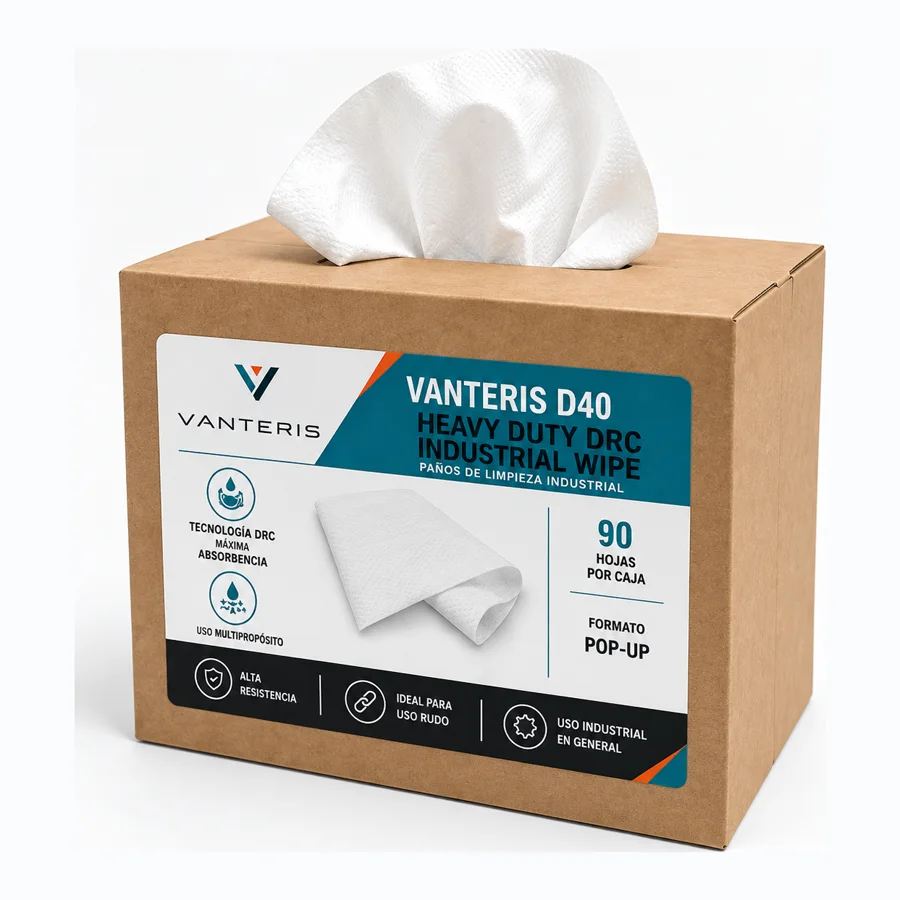
Heavy-weight DRC industrial wipe, 9 × 16.5 in, Pop-Up format, 90 sheets per box.
VTN-WP-DRC-PPU-W916